Source: Paul Mosebach
Paludiculture – Innovative land use for wet peat soils
What is paludiculture?
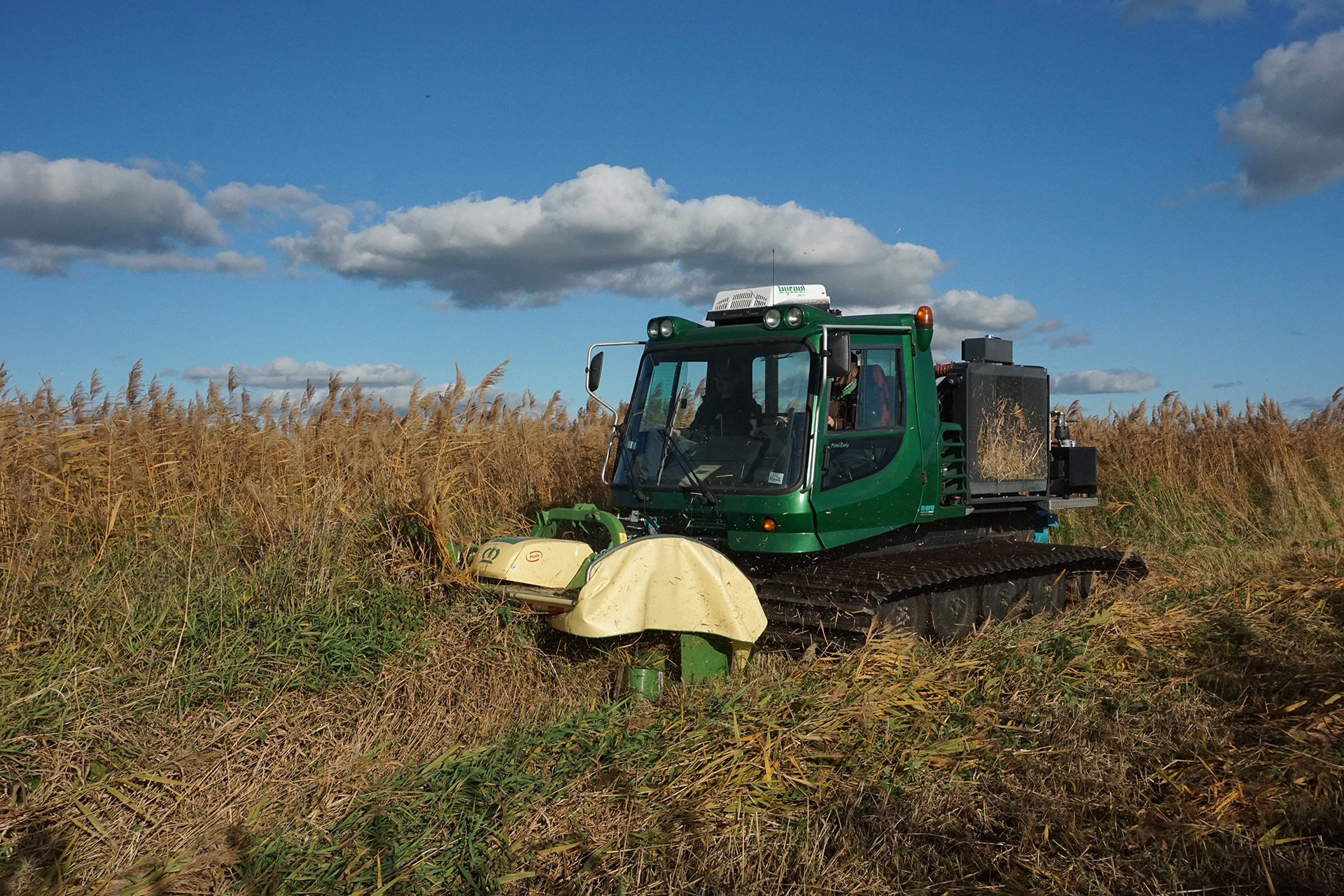
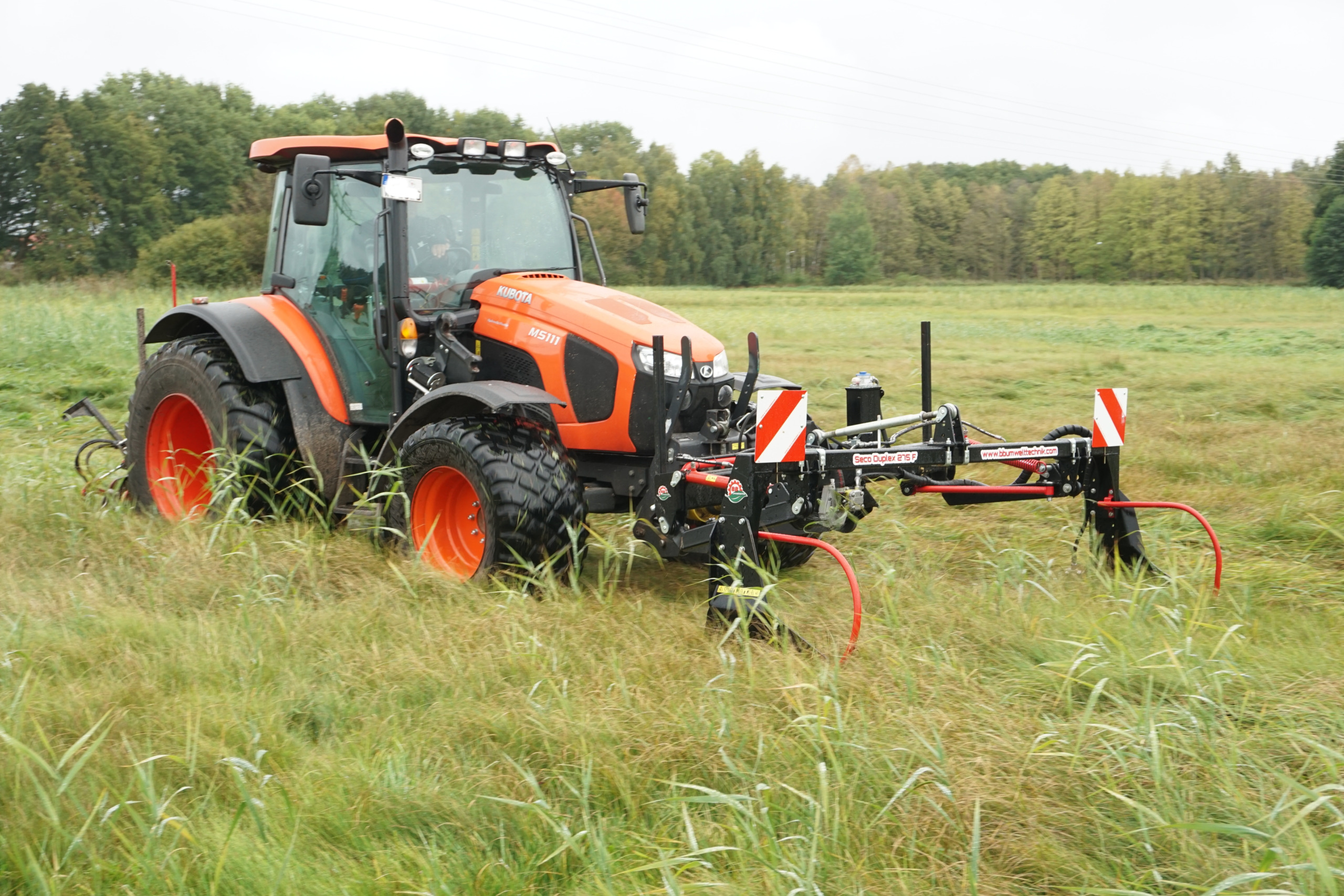
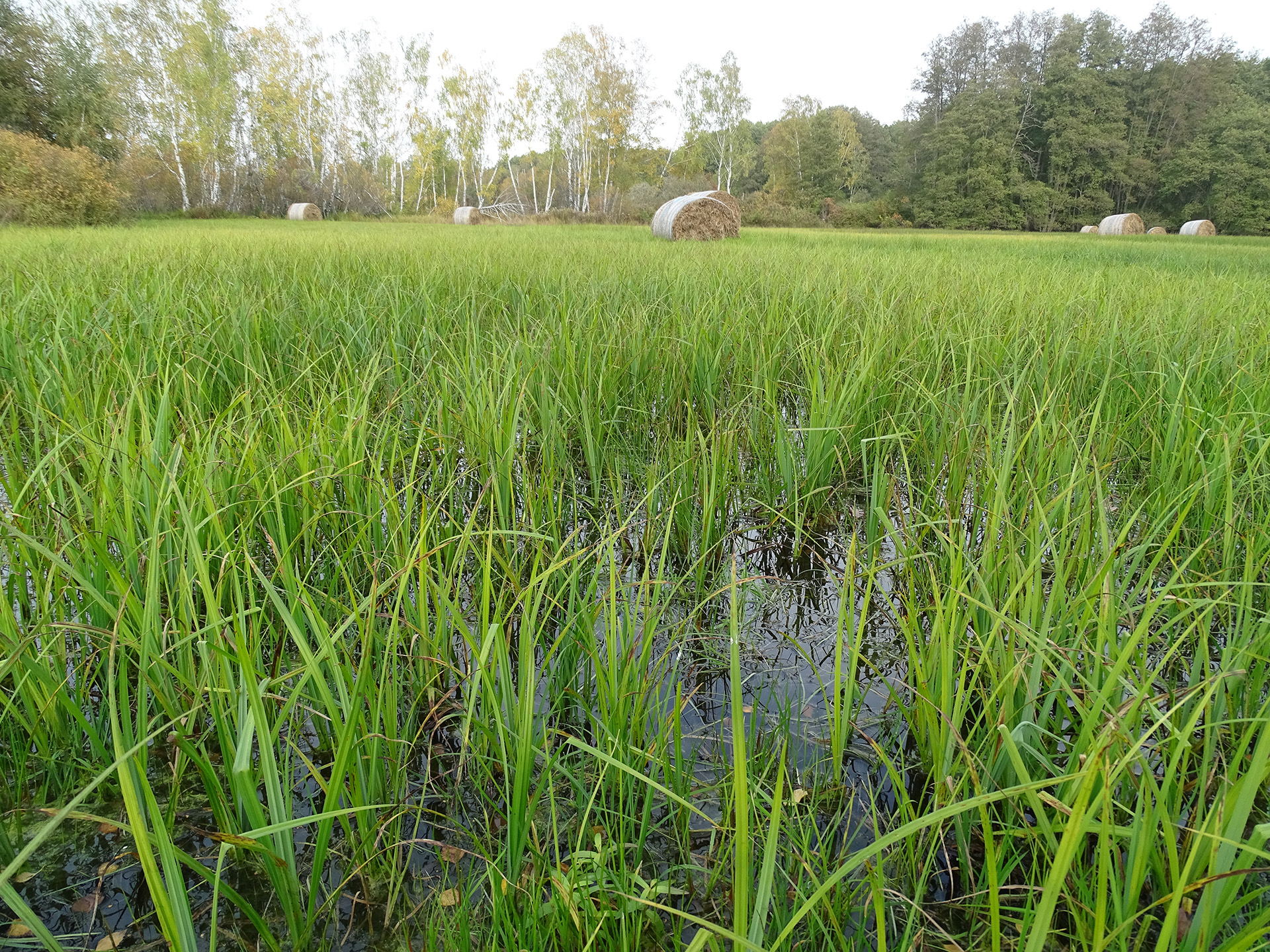
Paludiculture is the productive and peat-preserving agricultural and forestry use of wet and rewetted peatland sites [1]. A distinction is made between wet meadows and wet pastures paludiculture, as well as cropping paludiculture such as cattails, reeds and sphagnum mosses. Wet meadows usually develop through succession, but crops such as reed canary grass or sedges can also be deliberately established. The above-ground biomass of a wide variety of plant species that grow naturally in wet peatlands can be utilised.
The term ‘paludiculture’ is derived from the Latin word ‘palus’, meaning ‘marsh’ or ‘swamp’.
The main objectives of paludiculture are peat preservation and the creation of new added value through the sustainable use of rewetted peatland areas. The rewetting of previously drained peatland areas reduces very high greenhouse gas emissions, thereby protecting the climate and, consequently, the foundations of our livelihoods. Furthermore, water and nutrients are retained, and species diversity typical of the site is promoted. Paludiculture is therefore a concept that can reconcile ecology and economics and enable the sustainable use of wet and rewetted peatland areas.
Source: Stephan Busse
Source: Sabine Wichmann
Drained peat soils: peatland subsidence, land subsidence and declining productivity
Around 7 per cent of Germany’s agricultural land consists of peat soils. Many of these sites have been in use for decades, and in some cases for centuries. A characteristic feature of peatland sites is a layer of peat at least 30 cm thick. Peat accumulates under water-saturated conditions when biomass production exceeds the decomposition of organic plant residues. Peat soils and other carbon-rich soils are referred to as organic soils due to the presence of undecomposed plant residues.
The drainage of peatlands for agricultural use leads to fundamental physical, chemical and biological changes in the peat body. The absence of water removes buoyancy, causing the peat to compress and the peatland to subside. Furthermore, oxygen enters the soil, leading to the microbial decomposition of the peat under aerobic conditions, CO₂ emissions and peat loss. As a result, there is an average loss of height of 1 to 2 cm per year. The consequences are progressive soil degradation and an increasingly limited suitability of the land for agricultural use. The land mulmifies (the peat loses its structure), the surface becomes impermeable to water, and the peat body can no longer swell. Layers of compacted dry peat form. This increasingly leads to standing water on the surface, which makes further cultivation using conventional agricultural methods more difficult.
The result: agricultural productivity in drained peatlands declines in the long term, whilst farming becomes increasingly difficult. By raising water levels and the establishment of wetland farming (paludiculture), peatland subsidence can be halted whilst at the same time enabling sustainable added value.
Site-specific plant selection for wet peatland management
For the long-term successful management of rewetted peatlands, it is crucial to adapt to the naturally occurring vegetation and to select suitable plant species for cultivation. Peatlands differ in terms of their site conditions, such as nutrient availability and hydrological conditions. A broad distinction is made between bogs and fens.
Only plants that are adapted to high water levels and the specific site are suitable for cultivation in wet peatlands.
In Europe, the potential plant species for rewetted lowlandbogs are:
- Wet meadows (through succession)
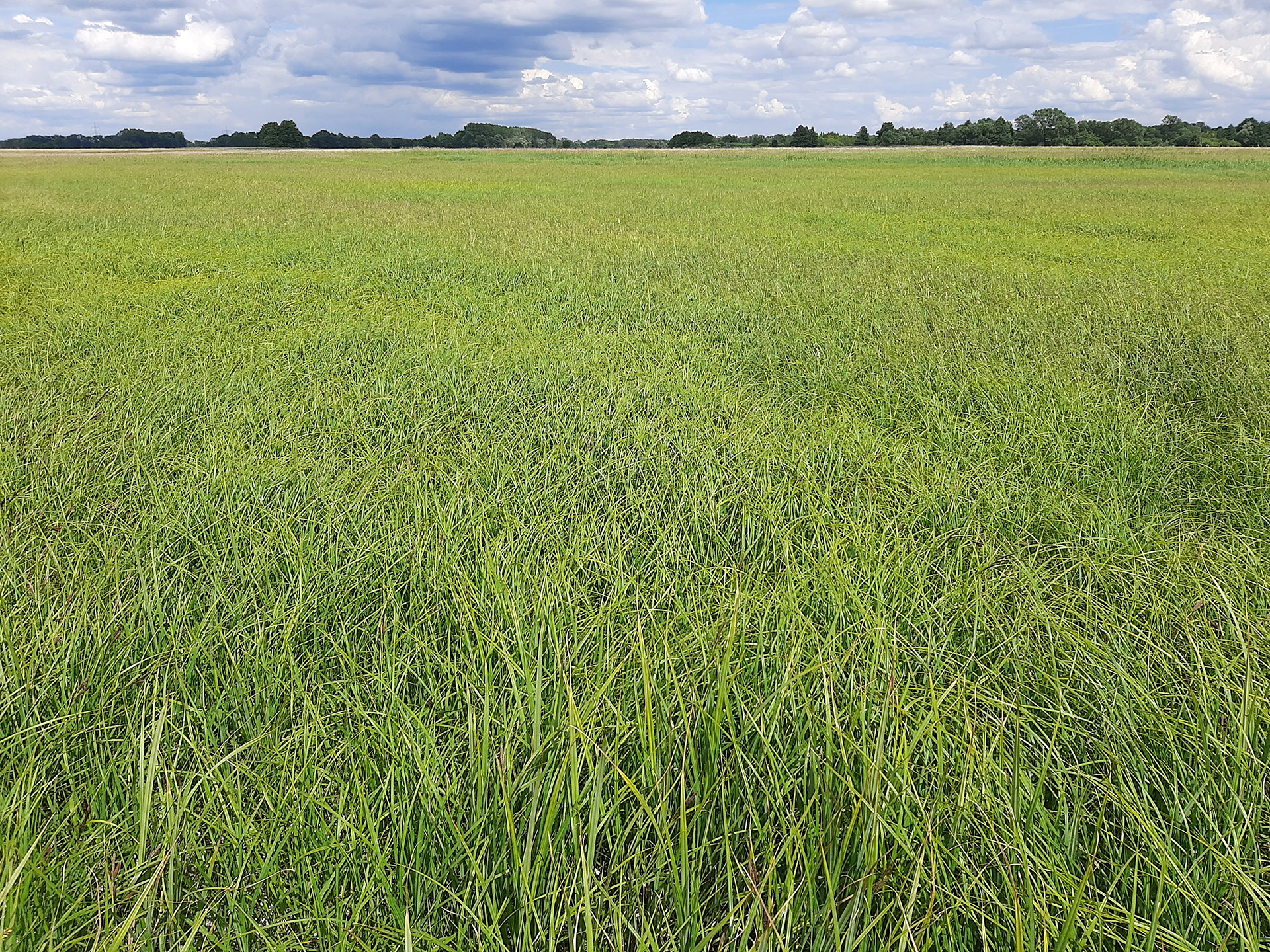
- Cropping paludiculture for sedges (Carex spp.)
- Cropping paludiculture for reed canary grass (Phalaris arundinacea)
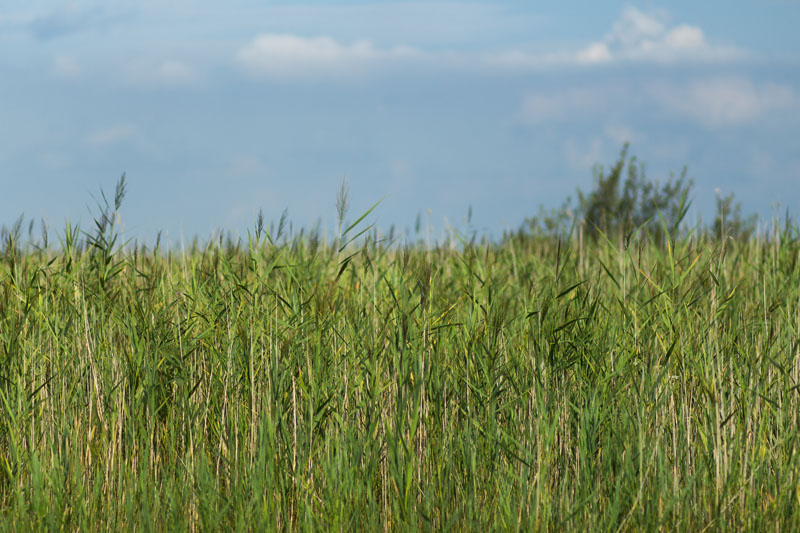
- Cropping paludiculture for reed (Phragmites australis)
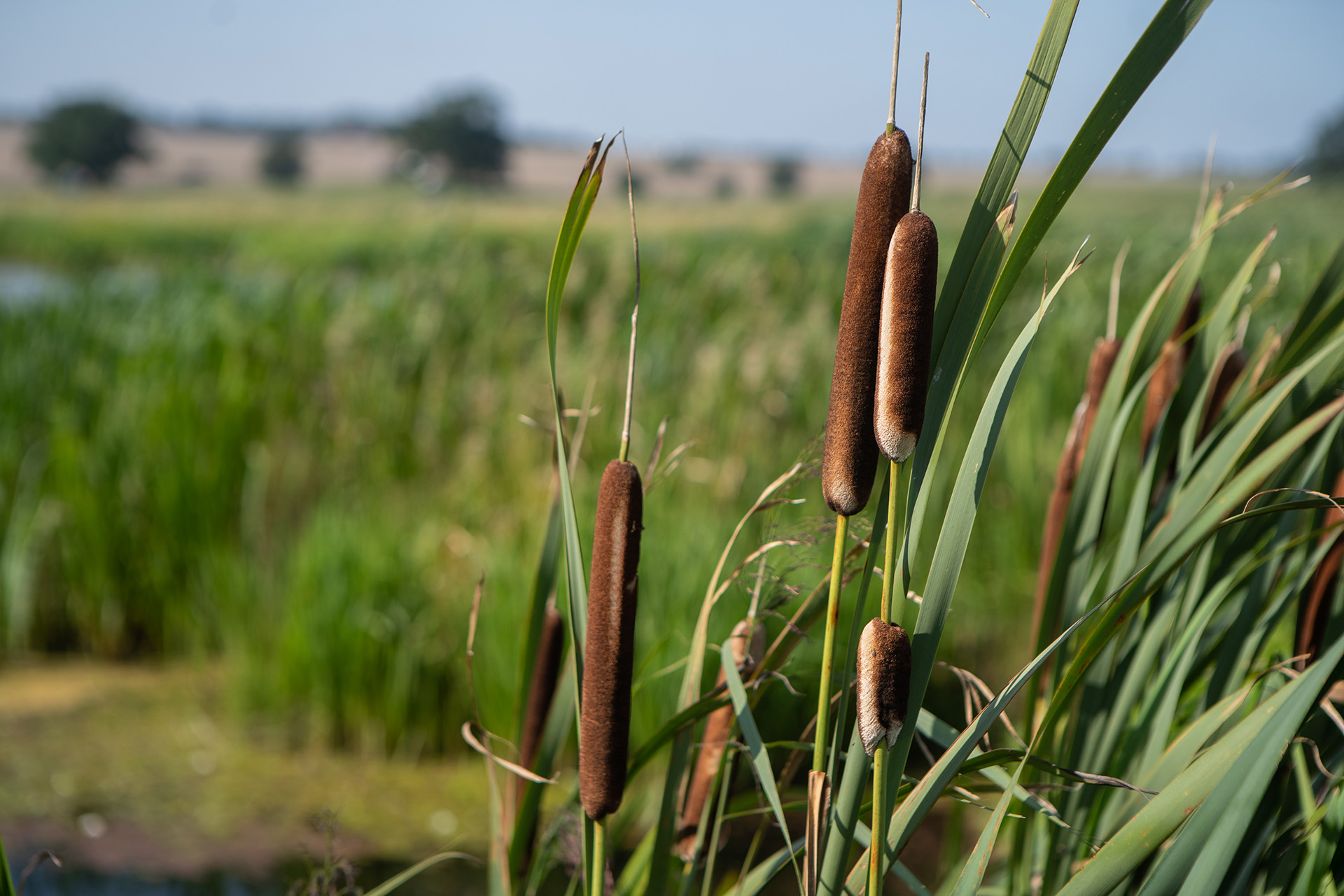
- Cropping paludiculture for cattails (Typha latifolia, T. angustifolia)
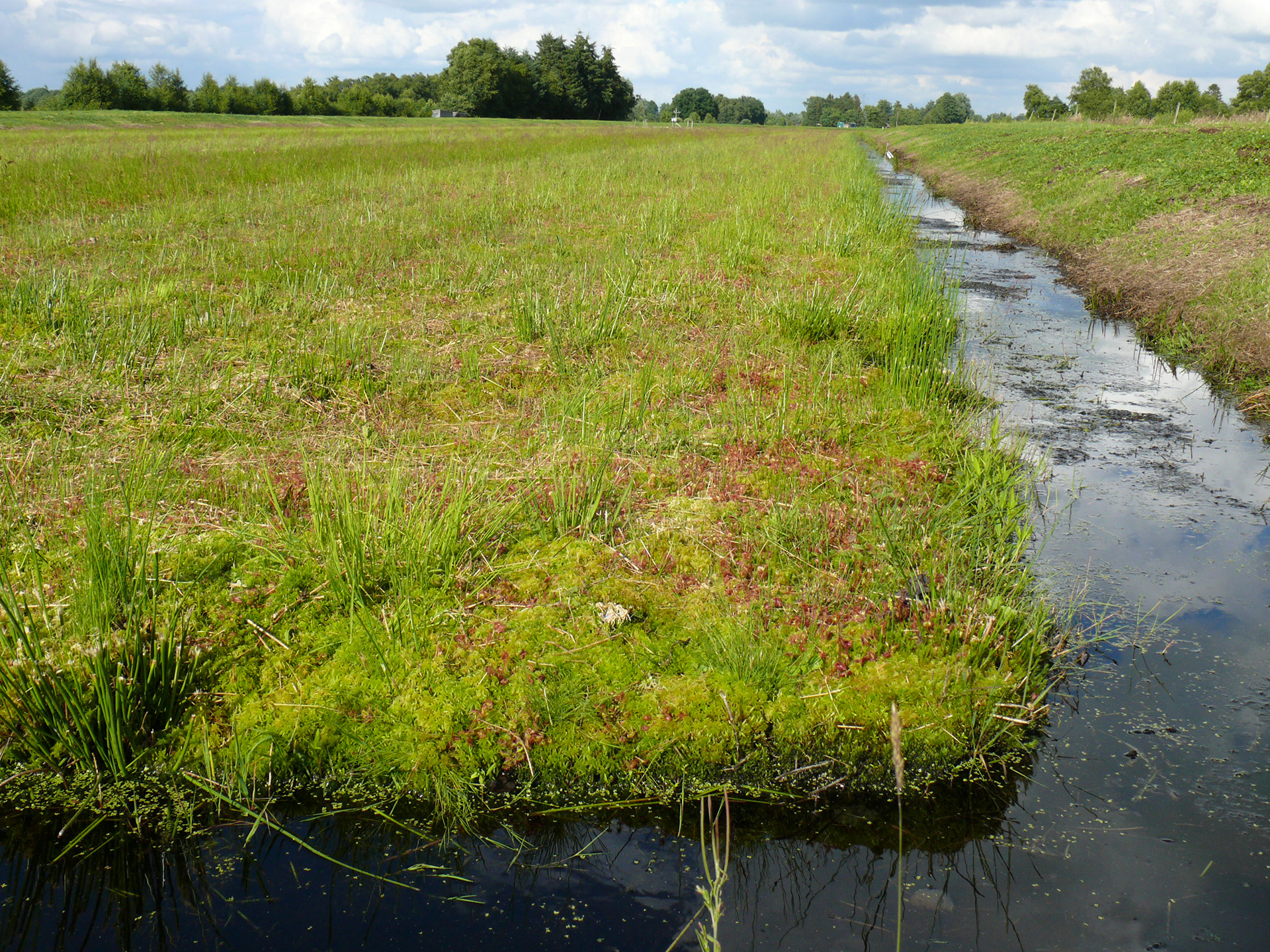
Sphagnum mosses (Sphagnum spp.) and round-leaved sundew (Drosera rotundifolia) are particularly well suited to bogs.
Source: Tobias Dahms
Source: Paul Mosebach
Further information
Sources and further information
[1] Wichtmann, Wendelin; Schröder, Christian; Joosten, Hans (2016): Box 1.1. What is paludiculture? In: Wendelin Wichtmann, Christian Schröder and Hans Joosten (eds.): Paludiculture – Management of wet peatlands. Climate Protection – Biodiversity – Regional Value Creation. Stuttgart: Schweizerbart, p. 1.
[2] Mosebach, P.; Birr, F.; Wenzel, F.; Luthardt, V.; Schleip, I. (2024): Biodiversity-enhancing measures and management techniques for site-appropriate lowland moorland use. Published by the Brandenburg Ministry of Agriculture. Link: https://mleuv.brandenburg.de/sixcms/media.php/9/Standortgerechte-Niedermoorbewirtschaftung.pdf
[3] Nordt, A.; Abel, S.; Hirschelmann, S.; Lechtape, C.; Neubert, J. (2022): Guide to the Implementation of Paludiculture (Greifswald Peatland Centre Publication Series (self-published, ISSN 2627‐910X), 5). Link to the document:https://www.greifswaldmoor.de/files/dokumente/GMC%20Schriften/2022-05_Nordt%20et%20al_Paludikultur%20Leitfaden.pdf
[4] Birr, F.; Abel, S.; Kaiser, M.; Närmann, F.; Oppermann, R.; Pfister, S.; Zeitz, J. (2021): Sustainable agriculture and forestry on lowland moors. Fact sheets on climate-friendly management practices that promote biodiversity. Extract from BfN Scripts 616, revised edition. Edited by the Eberswalde University for Sustainable Development and the Greifswald Peatland Centrum. Eberswalde University for Sustainable Development; Greifswald Peatland Centrum. Eberswalde, Greifswald. Link:https://www.moorwissen.de/files/doc/paludiculture/imdetail/steckbriefe_pflanzenarten/Steckbriefsammlung.pdf
[5] Oehmke, Claudia; Abel, Susanne (2016): Selected examples of paludiculture. In: Wendelin Wichtmann, Christian Schröder and Hans Joosten (eds.): Paludiculture – Management of Wet Peatlands. Climate Protection – Biodiversity – Regional Added Value. Stuttgart: Schweizerbart, pp. 22–38.
[6] Zeitz, Jutta (2016): Peatland degradation processes following drainage. In: Wendelin Wichtmann, Christian Schröder and Hans Joosten (eds.): Paludiculture – Management of wet peatlands. Climate protection – Biodiversity – Regional added value. Stuttgart: Schweizerbart, pp. 7–9.
[7] Zeitz, Jutta (2016): The effects of drainage on productivity. In: Wendelin Wichtmann, Christian Schröder and Hans Joosten (eds.): Paludiculture – Management of wet peatlands. Climate protection – Biodiversity – Regional added value. Stuttgart: Schweizerbart, pp. 9–13.