Source: Bas Spanjers
Managing wet peatlands: an overview of technical solutions
The key objective of adapting the machinery is to minimise ground contact pressure, in order to enable operation on rewetted peatland sites (further information on contact pressure). There are several ways to reduce the contact pressure of the machinery used. On the one hand, by reducing the total weight, for example through the use of lighter machinery, lighter components or lighter attachments. On the other hand, by increasing the machine’s contact area with the ground. For the management of wet peatlands, a distinction is made between three categories of machinery – small-sized machinery, specialised machinery and adapted machinery – which cannot always be clearly distinguished from one another in terms of their application areas and design. [1; 4; 5]
Small-sized machinery
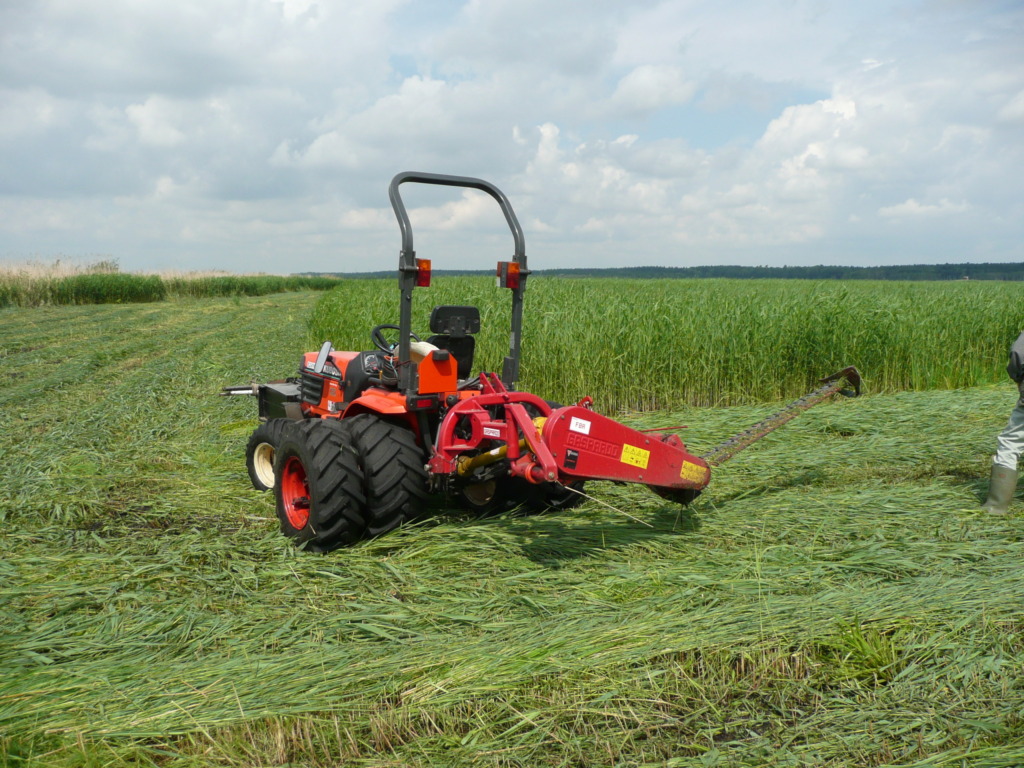
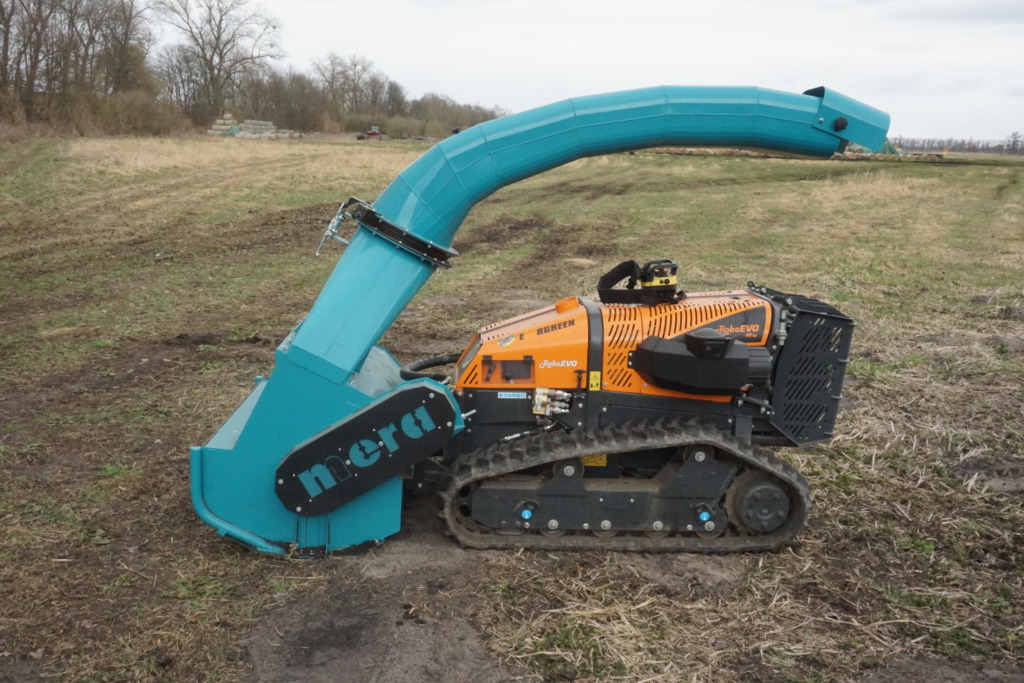
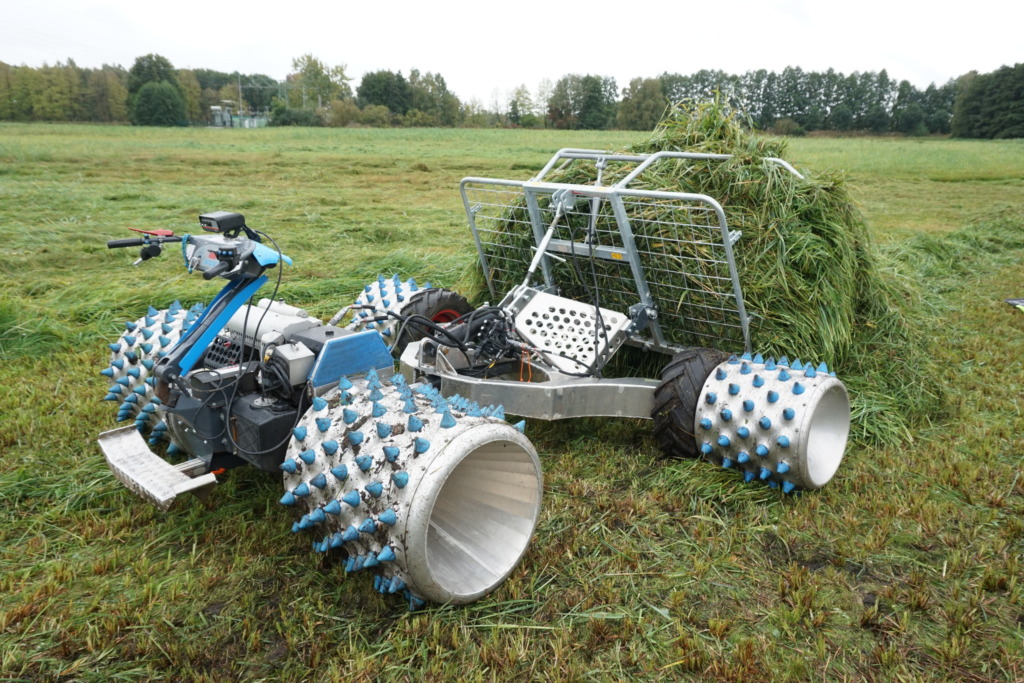
The term ‘small-sized machinery’ refers to small-sized technical solutions, such as small tractors (<2 t unladen weight), single-axle tractors and robot-assisted systems. Machines classified as small-sized machinery can be extremely manoeuvrable and easy to transport. These machines are particularly suitable for sites with near-surface water levels and areas with a fine-grained structure. However, there are limitations in terms of area output and trafficability in dense stands.
The machines are fitted with caterpillar drives, tyres or spiked rollers. Thanks to their large contact area and low kerb weight, they exert only minimal pressure on the ground. A range of attachments is available for tractors.
The investment costs are moderate compared with specialised machinery. There is potential for future application areas of autonomous, lightweight (swarm) technology, e.g. tractors for individual process steps (maintenance pruning on sphagnum moss areas, transporting biomass to the edge of the site, and others) [1].
Source: Wendelin Wichtmann
Source: Andreas Haberl
Source: Andreas Haberl
Adapted machinery
The term ‘adapted machinery’ generally refers to conventional standard machinery used for grassland, which has been optimised – i.e. adapted – for the conditions found in peatlands. A distinction is made between light standard machinery (< 4 t) and heavy standard machinery (4–8 t). Adapted machinery is used in the management of moist and wet meadows, but is generally unsuitable for cropping paludiculture. In the case of wet meadows, the scope for its use depends heavily on site conditions throughout the year.
Source: Andreas Haberl
Source: Paul Mosebach
Source: Tobias Dahms
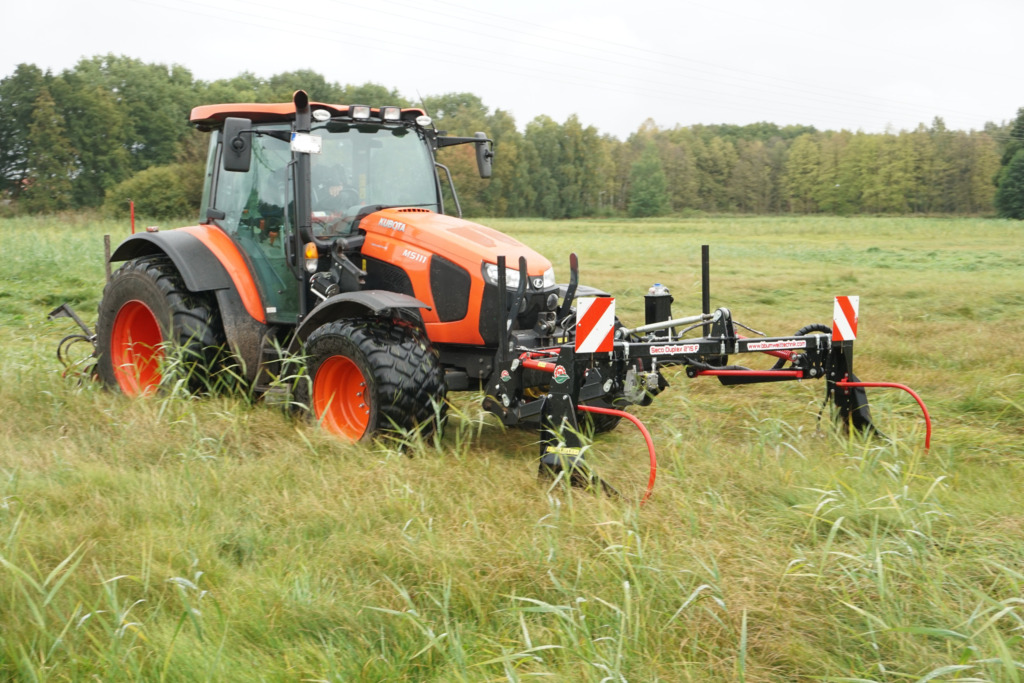
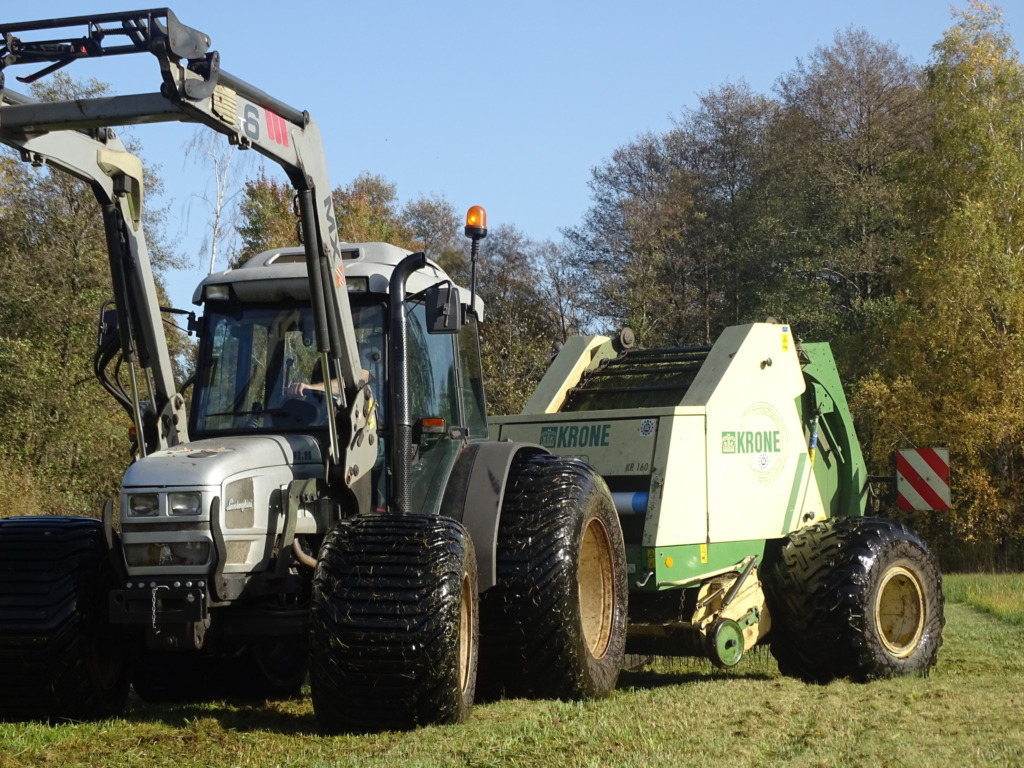
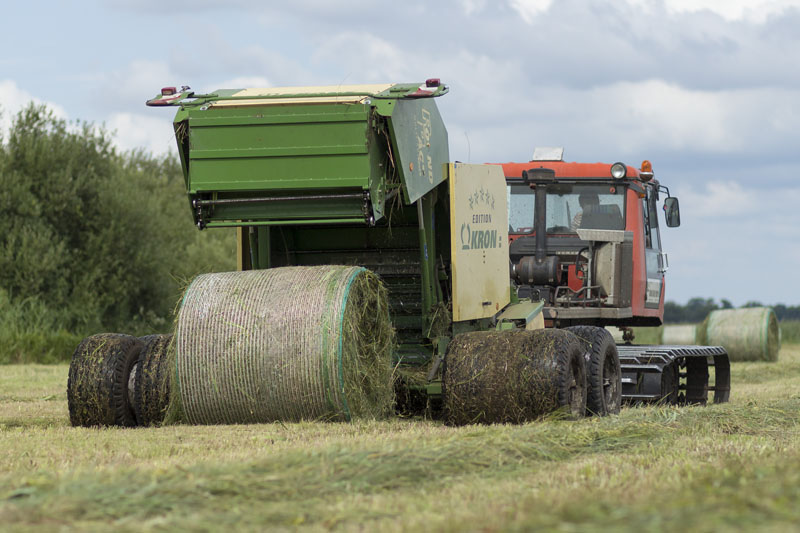
Conversion measures can significantly reduce contact pressure. Both tractors and attachments can be adapted. Standard machinery can be adapted using dual or twin tyres, wide tyres, terra tyres, bogie bands or delta tracks. It should be noted that, for example, the axles must be designed to accommodate the respective adaptation.
Adapted machinery (light, <4 t) – for use on areas where the water level is 0–20 cm below ground level
Standard tractors with a low total weight and suitable tyres (wide, multiple tyres, low-pressure) enable higher area output than small-sized machinery. They can be used on land with near-surface groundwater levels (0–20 cm below ground level), depending on the specific on-site conditions, but are only suitable for swards or vegetation that has sufficient load-bearing capacity to support their weight. Due to the still relatively high weight of the machines and the type of tyres, there is an increased risk of soil compaction and breakthrough of the sward or vegetation cover. The contact pressure of this category of machinery is generally up to 300 g/cm² [1]. Sphagnum moss management represents a special case [2].
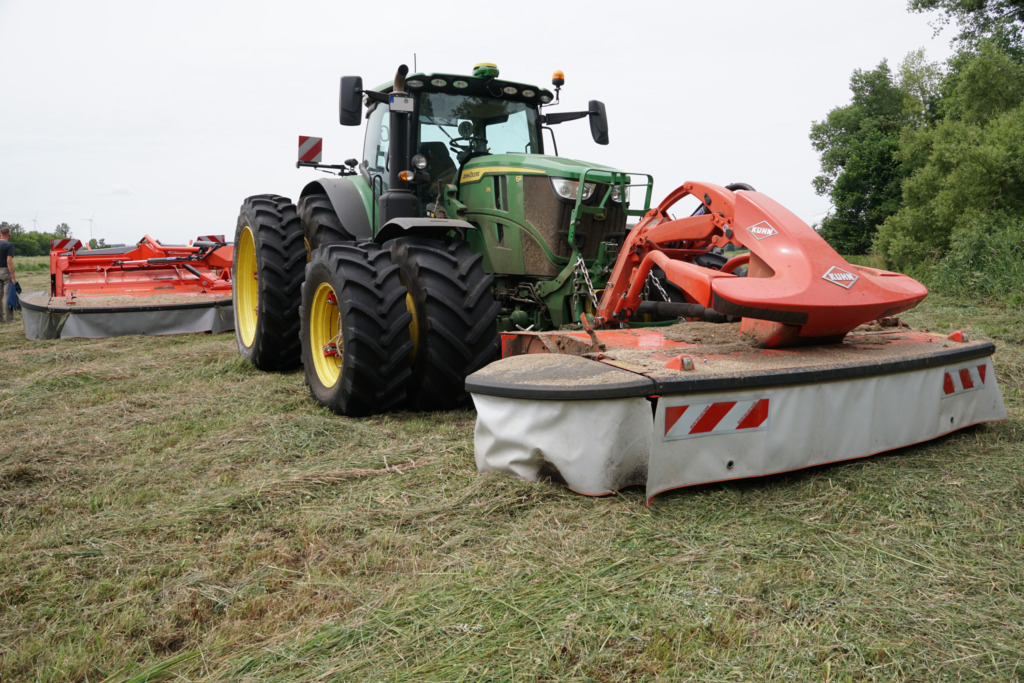
Adapted machinery (heavy 4-8 t) – for use on land where the water level is 20–45 cm below ground level
Heavy 4-8 t standard machines with all-wheel drive, crab steering or Delta steering offer high area output and great adaptability. At the same time, they carry an increased risk of soil compaction and sward damage compared with the lighter class, particularly on wet sites. They have great potential for use in drier years or in peripheral areas. The contact pressure varies depending on the machine, but is generally over 450 g/cm² for this category of machine [1]. Machines with a contact pressure of more than 408 g/cm² are not included in PaludiScout (see also About us).
Source: Sabine Wichmann
Specialised chain-based machinery
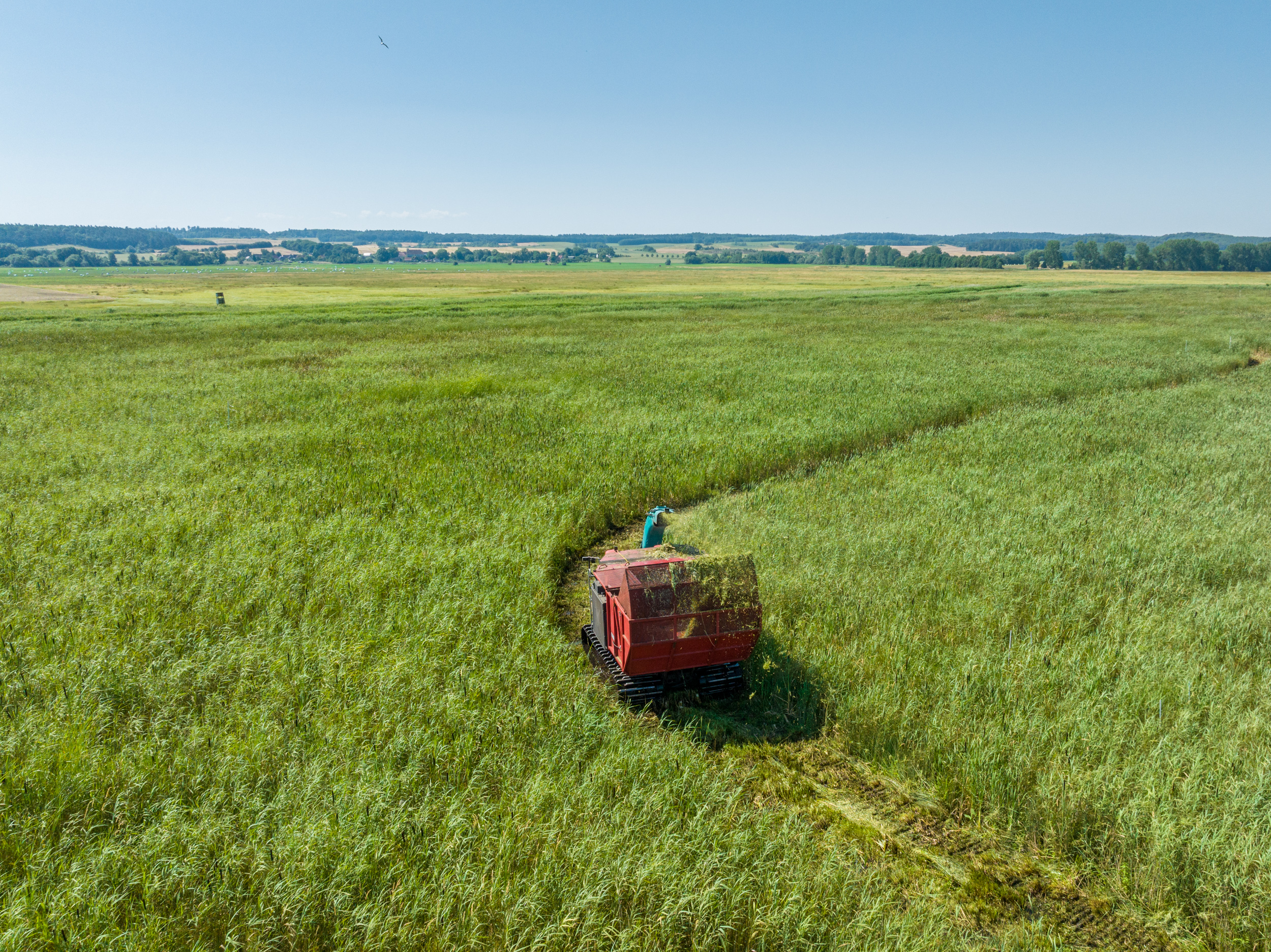
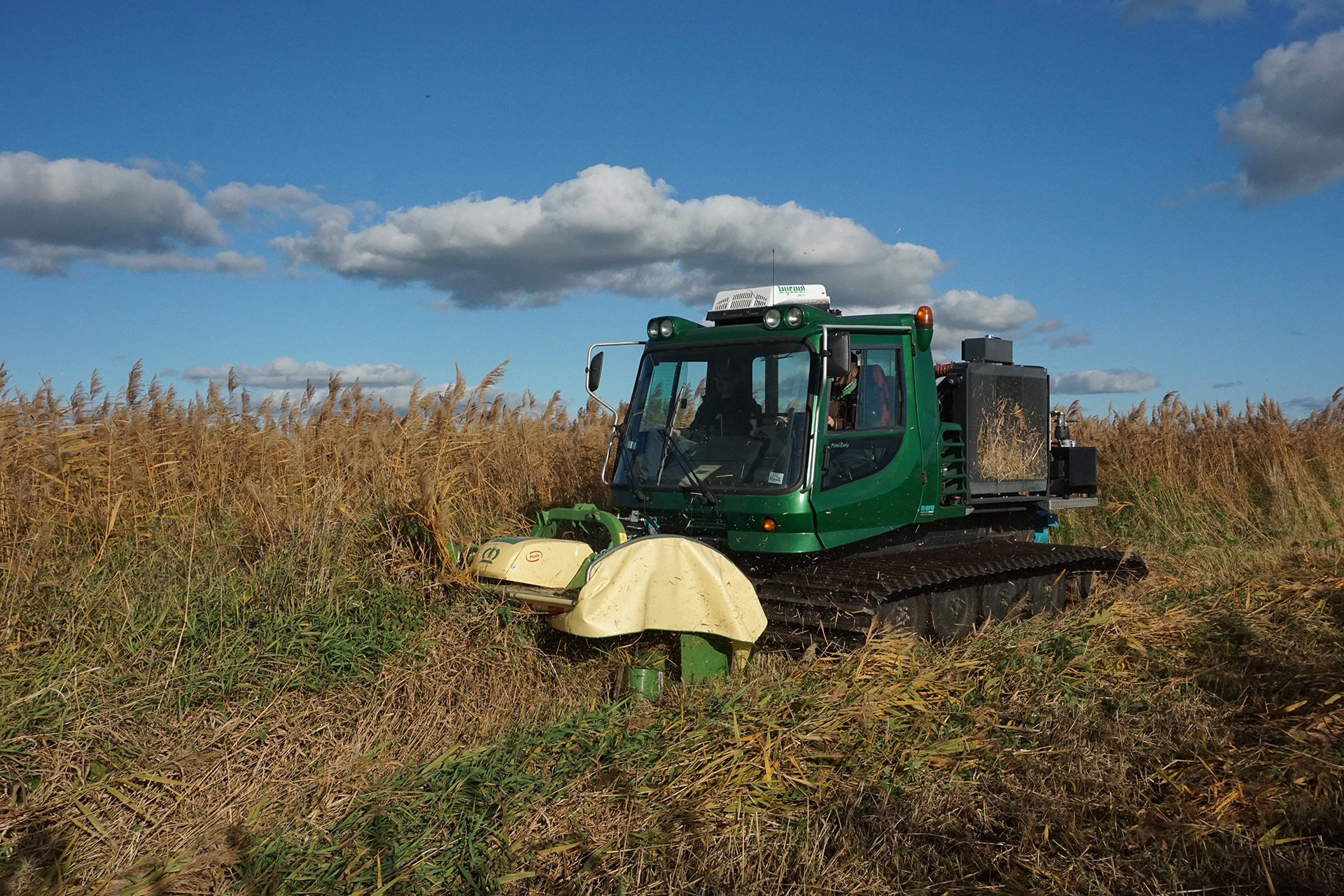
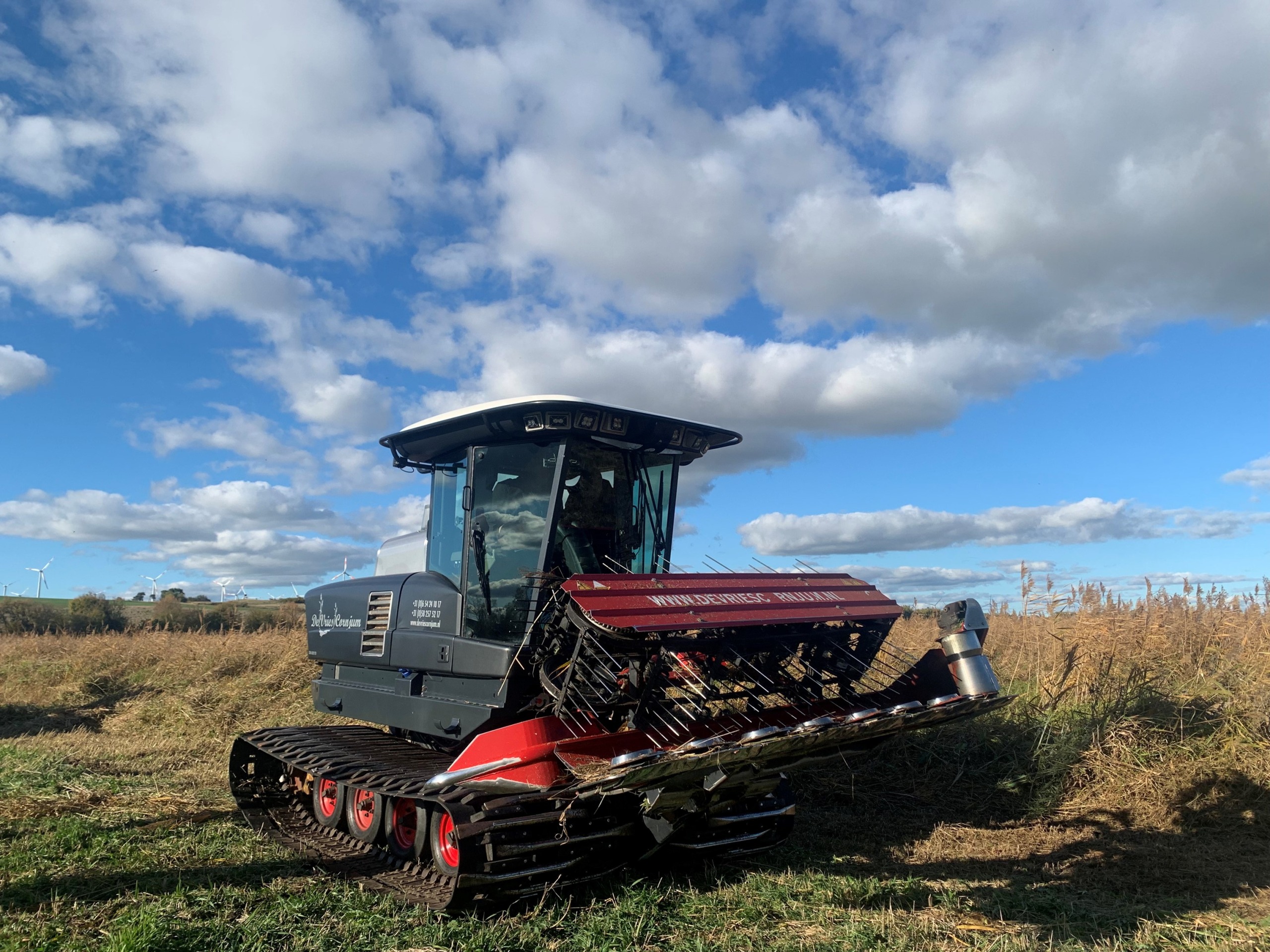
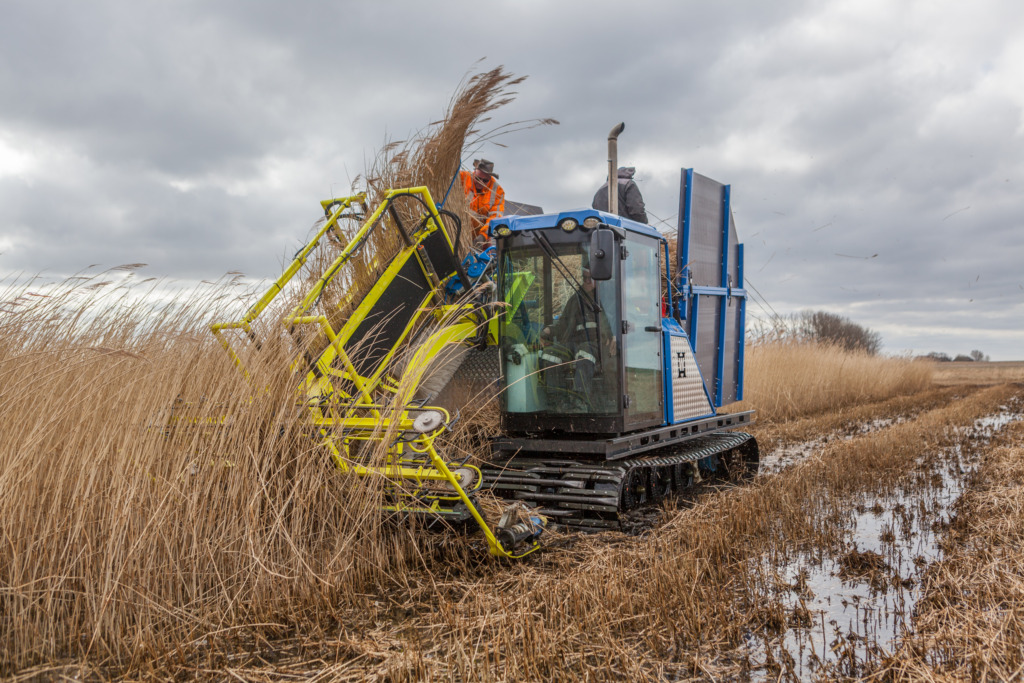
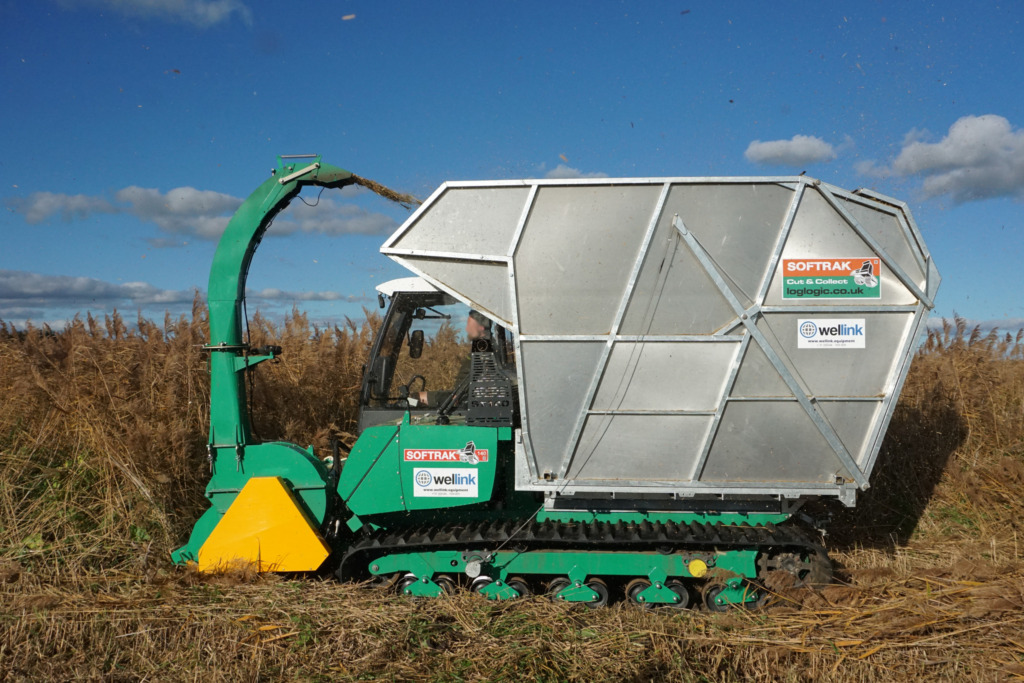
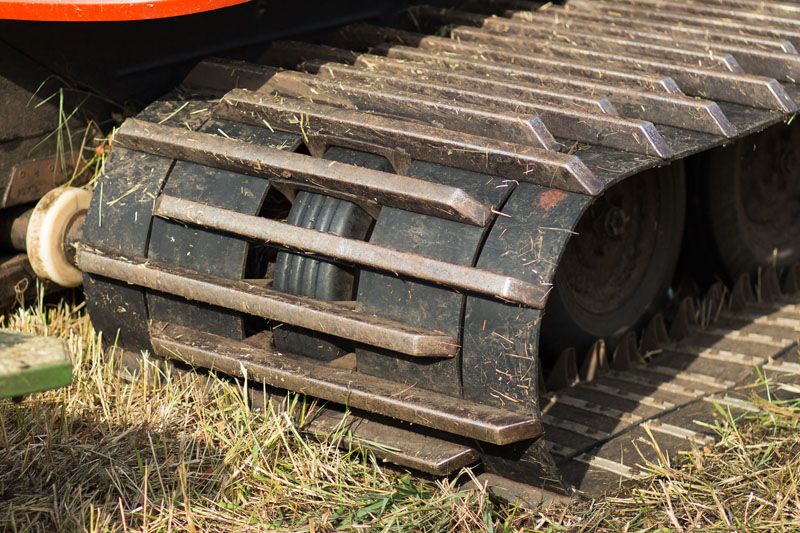
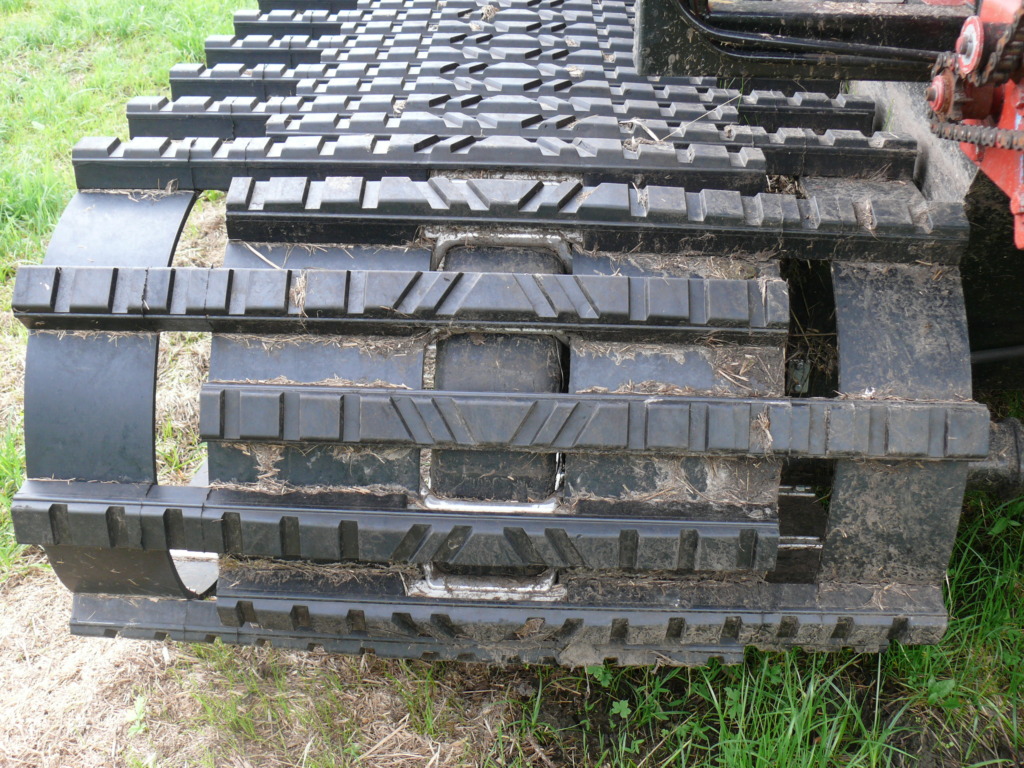
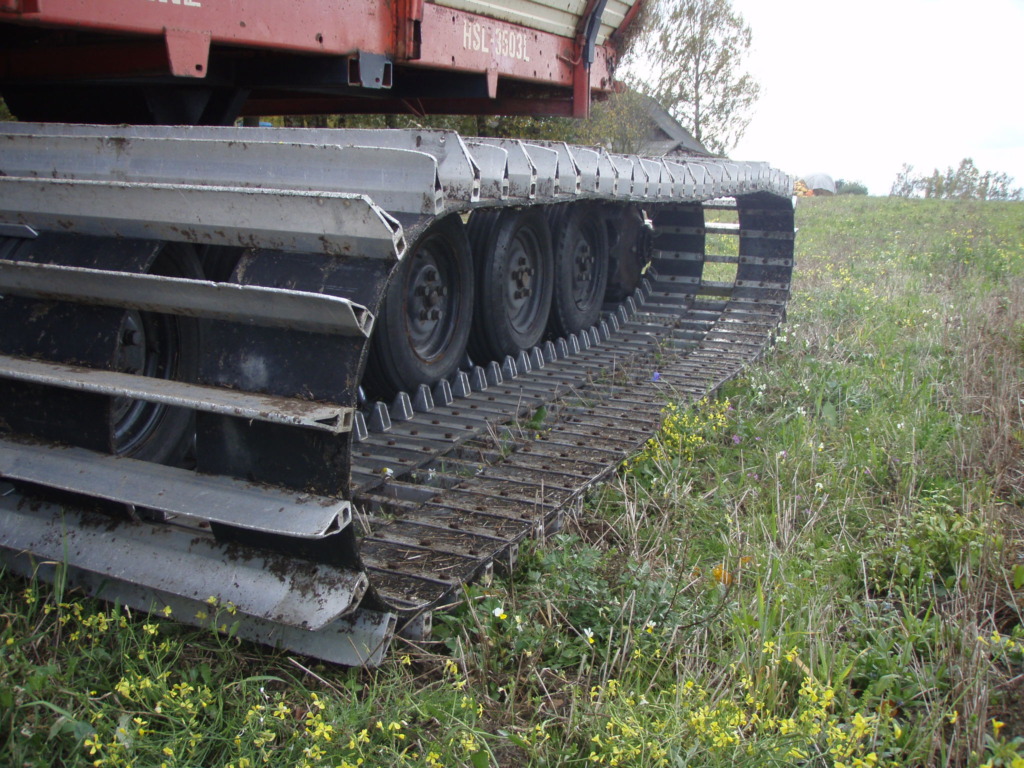
These specialised vehicles, fitted with wide caterpillar drives, exert the least ground pressure and are suitable even for areas with overflow or low load-bearing capacity. They enable safe travel under the most difficult conditions and are used both on wet meadows and in cropping paludiculture, particularly amongst reeds and cattails. Track-type vehicles exert very low contact pressure, but can cause damage to the sward, the vegetation cover and the soil structure, particularly when negotiating tight bends and during repeated passes. This risk can be reduced by using adapted tracks, such as wider tracks and rounded lugs.
Source: Tobias Dahms
Source: Andreas Haberl
As tracked machinery is not usually authorised for use on public roads, transport usually has to be organised using a low-loader. To enable standard road transport, the machine’s width should not exceed 3 m. Otherwise, special permits are required or the tracks must be removed for transport. Specialised tracked machinery involves high investment and operating costs.
Source: Tobias Dahms
Source: Sabine Wichmann
Quelle: Andreas Haberl
Specialised wheel-based machinery
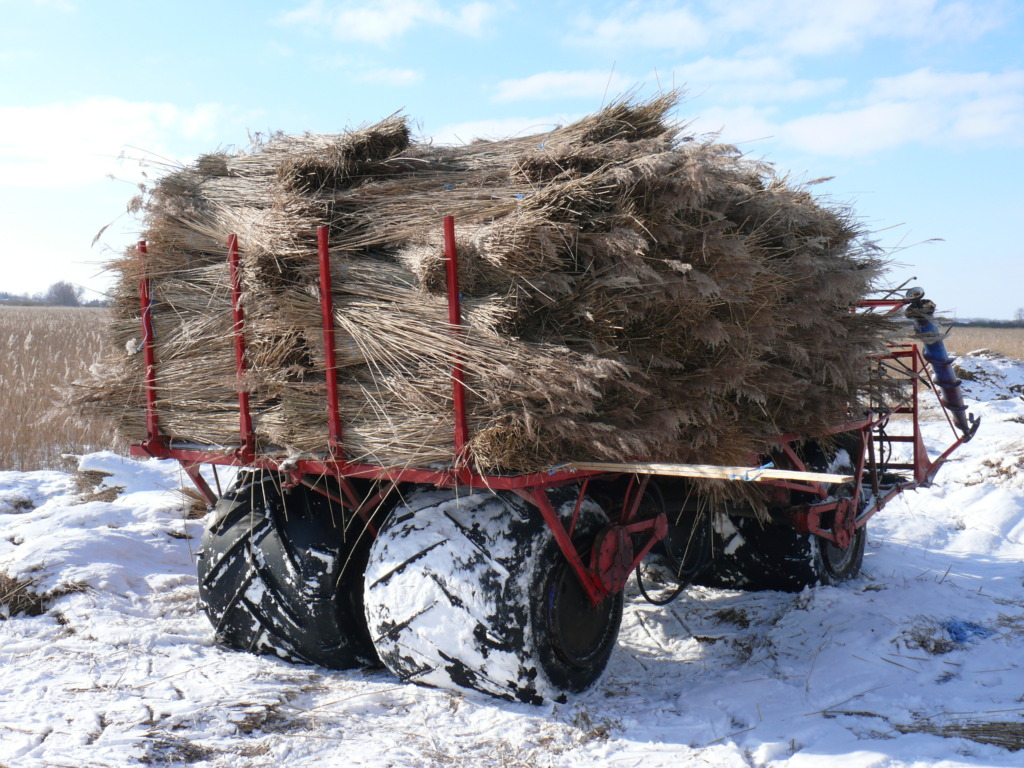
This technique, which uses low-pressure balloon tyres, is frequently employed in reet cutting. Thanks to the lightweight construction and the large contact patch of the balloon tyres, the contact pressure is kept very low. This generally makes it possible to drive on wet peatland sites. However, when water levels are high, there is a risk that the engines may float. This can lead to reduced manoeuvrability and increases the risk of ground damage, for example due to wheel slip.
Older engines with limited engine power or specially adapted in-house designs are often used.
Source: Sabine Wichmann
Sources and further information
[1] Mosebach, P.; Birr, F.; Wenzel, F.; Luthardt, V.; Schleip, I. (2024): Biodiversity-enhancing measures and management techniques for site-appropriate lowland moorland use. Published by the Brandenburg Ministry of Agriculture. Link: https://mleuv.brandenburg.de/sixcms/media.php/9/Standortgerechte-Niedermoorbewirtschaftung.pdf
[2] Nordt, A.; Abel, S.; Hirschelmann, S.; Lechtape, C.; Neubert, J. (2022): Guide to the Implementation of Paludiculture (Greifswald Peatland Centre Publication Series (self-published, ISSN 2627‐910X), 5). Link: https://www.greifswaldmoor.de/files/dokumente/GMC%20Schriften/2022-05_Nordt%20et%20al_Paludikultur%20Leitfaden.pdf
[3] Schröder, C.; Dahms, T.; Paulitz, J.; Wichtmann, W.; Wichmann, S. (2015): Towards large-scale paludiculture: addressing the challenges of biomass harvesting in wet and rewetted peatlands. In: MIRES AND PEAT 16 (2015), Article 13, 1–18.
[4] Wichmann, Sabine; Dettmann, Sebastian; Dahms, Tobias (2016): Agricultural technology for wet peatlands. In: Wendelin Wichtmann, Christian Schröder and Hans Joosten (eds.): Paludiculture – Management of wet peatlands. Climate protection – Biodiversity – Regional added value. Stuttgart: Schweizerbart, pp. 63–70.
[5] Wiedow, Denny; Burgstaler, Jörg; Schröder, Christian (2016): Trafficability of wet and rewetted fens. In: Wendelin Wichtmann, Christian Schröder and Hans Joosten (eds.): Paludiculture – Management of wet peatlands. Climate protection – Biodiversity – Regional added value. Stuttgart: Schweizerbart, pp. 59–63.